
Angelo Provenzano
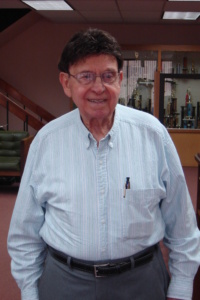
Name: Angelo Provenzano
Rank: Staff Sergeant
Date of Birth: Februrary 29, 1920
Birthplace: Melrose Park, IL
War: WWII
Dates of Service: 1942 – 1946
Branch: US Army
Unit:
Location: Scotland, England, France, Belguim
Prisoner of War: No


Interview Transcript
Today is July 8th 2009, this is Fidencio Marbella with the Melrose Park Library in Illinois. Also present are Heidi Beazley reference librarian here at Melrose Park, and Mr. John Misasi. John is a member of our library board, and is a World War II veteran. Today we will be speaking with Mr. Angelo Provenzano. Angelo was born here in Melrose Park, on February 29th , 1920. He served in the United States Army from 1942 through 1946, and the highest rank he achieved was as a Staff Sergeant. This interview is being conducted for the veterans history project at the Library of Congress. OK, let’s go ahead and get started – Angelo why don’t you tell us,, a little bit about your family when you were growing up here in Melrose Park? How many siblings you have and, about your parents?
Well I was born and raised in Melrose Park, my parents came from Calambria, Italy. They settled in Melrose Park and had nine children, three boys and six girls. Two of us boys went into World War II, and my younger brother went into Korea. Now my father had leukemia, and he died in his early fifties, and, my older sisters, two older sisters worked hard to keep the family together and that, and, in Melrose Park where I grew up I went to Melrose Park grammar school, I went to Proviso East township High School, and…we played in all the – I participated in all the different sports in Melrose Park. For a while (unintelligible) had a boxing team and I was on the boxing team there, and, I gotta tell you about an incident in the Army with the boxing. But, we, played foot..I played football with the Melrose Park Gales, and we had out own little club, and we called it the Mars which was in Melrose Park, and Alex Serpico’s had one of those old-fashioned barns with the hay loft on top and that was our clubhouse. And…we used to go fishing at the creek on North Avenue in Melrose Park, there’s a creek runs across there, where it says Andy Frenzel…
Oh, near 15th Avenue?
…Yes right. So we used to go fishing there, first we’d stop on 18th and Division – there were 2 food stores there. And, we’d stop in and we’d get a nickle’s worth of liver. For a nickel you’d get big piece of liver, and we’d ask them for some store string, and we tied a string around the liver, then we’d go to the creek, and we’d throw that liver in there, and the crabs would, would grab it. And as they grabbed it we would just drag it slowly in, and when they got near the shore we would grab them. And, that wasn’t the half of it…actually when we caught the crabs, there was a little dump where people were throwing cans and everything there, we got one of those old rusty cans and we would boil the water in there, put the crabs in there the poor things, threw them in there alive, and I’d sit down and, we’d eat those crabs. We also had a fishing hole…Schultz’s farm they called it over there, and it was a, a little watering hole for his cattle and his horses that he had, and we would go swimming there. At that time, that was Depression time, we couldn’t afford swimming suits, so we would naturally just jump in there and nobody could see us from North Avenue because huge trees around and everything. So we had our own swimming hole there. We also used to go to the slough, which was on Chicago Avenue and…where the church is there, Chicago Avenue and First Avenue between First Avenue and Thatcher, the Trailside Museum is right there. So we used to…we used to go over there and we’d bring our snow shovels with us and clean the snow off the slough there., it was water that would run in from the Des Plaines River, we’d clean that off and we’d play hockey there. And also the Trailside Museum being there, we’d make the trip we’d go to Amling’s first, Amling’s Flowerland, lift up one of those hay lofts there, and, bundle of hay, and there’d be all little mice, and we used to catch them by the buckets, we’d bring a bucket and just scoop them up with a bucket, and then we’d take them to the Trailside Museum, and they’d let us feed the snakes with them. And its amazing, that snake maybe would be about a half-inch in diameter his body, and as he took that mouse in you would see his body, just…the picture of the mouse just going through there, you know…it was really something. And then we also…all our fathers used to make wine then, so we used to get the barrel staves and we’d break, break the barrel and get the staves and we’d tie them on our, on our shoes and we’d go skiing by the slough there. We’d go down, because there was a slope from the Trailside museum there and we’d put that on her and that’s how we learned how to ski and stuff there. So we had quite a, quite a time I remember in town there, our friends and that..like, Mikey Solostino God Bless his soul he was in the Army, we was a World War II veteran too. He just passed away about 4 years ago, and his mother used make root beer and, that homemade root beer was so good. And Mikey would leave the window open, and then us kids would go in there, into the window-Mikey (unintelligible) his mother made the root beer, we’d go stealing root beer right from his mother (laughing), and she knew it but his mother was, she was a queen I’ll tell ya. She knew he was doing that you know, and I think she purposely, she loved him because she knew he loved the root beer, you know? But, we had, quite a time there…and brought up with a big family, it was always nice during Depression time, that you got…nine in the family, between the brothers and sisters and, plus my Mom and Dad, and – which made 11. And, it was nice we’d have a big basement there, and a lot of the kids would come over and stuff, and we would, and enjoy things just by listening to the radio and that. Jack Benny was very popular then, and I remember we used to get a good kick out of Jack Benny, and we had an old Victrola down there you’d wind up and play records and that, and my Dad had some Italian records. And it was a lot of fun growing up with a big family, and all the kids and stuff in the neighborhood, we were all in that Depression era, so we all were used to getting dried apricots and dried prunes and stuff. So, we all…enjoyed life as best we could under the conditions. We’d find a little can and played kick the can, we’d play hockey with the can, we’d get some of those Carnation milk cans and put them on our, shoes kicked them in and, called them horseshoes and stuff. We’d make our own stilts, and, we’d get our stilts and, we’d have to get on it, we’d see how high we could make them, sometimes we’d have to climb on the fence to get on them. We’d learned how to walk on those stilts and that…it was – it was fun we always made fun with what we had. We made our own bow and arrows, we would go to the creek there, those willow trees made beautiful bows. And we’d tie a string on them, and make some arrows up and shoot them and stuff and…so we managed, like I say, with just small things that we had. We went a long ways with them and, I’d say that, most of us guys turned all out to be good kids, and in fact when we were drafted to go into the army, we weren’t figuring out a way of how to get out of the army. We were worried sick about if we would become a 4F. At that time they had 1A and 4F. If you’re 1A they’d put you in the Army, if you’re 4F they’d send you home, you weren’t fit for the army. So we were going “wow, what if we’re 4F, what are we going to tell the people?” And, anyway fortunately we were all 1A, so we were all very happy. And, oh there’s a lot more things to say and that, but, what your next question?
Ok, why don’t you…can you tell where you were when you heard about Pearl Harbor?
When I heard about Pearl Harbor…yes I was working for Charles Bruning Company. They make everything for the engineer and draftsmen. And, that’s when I heard about it, and…we couldn’t figure out why they did something like that because the Japanese were talking to Franklin Delano Roosevelt who was our President, and then they went back to Japan, the first thing you know they bombed Pearl Harbor. So we were, we were very disappointed and wondering what was going to come off next. So we knew that there was going to be a war, I mean the United States wasn’t going to sit back and just take it. And that’s when I first heard of Pearl Harbor.
So you were drafted into the Army in December of 1942, …can you tell us what your family felt when, they found out you had been drafted?
Yes, my family they all were…very sad about it, because my father was very ill then, he had leukemia. And…doctor said he didn’t have much more time to live, and, so they, he tried, the doctor tried to get a deferment for me, but…they got me about a 2 month deferment, and then they said I had to go in, and, I went. So naturally the family felt very…they were all worked up about it, you know here I’m the big brother, and…dad’s gonna be gone. So, then when I went in they had what they called Class E allotment, and I told them if I got drafted I wanted to get that Class E allotment, because my father was on his deathbed and, they had no way – my mother needed the money to take care of the kids. So the allotment was that they took part of my salary and, the government put in some. It wasn’t too much but…as my rank went up in the Army, started off as a private naturally, and as my rank went up they kept, building the, putting a little more money into the, pension that my mother used to get. That was, that was about it with that.
Now was family able to see you off when you had to leave Melrose Park to join the Army?
Well, not really. I mean it was hard for them to, you know, to go there, and we went in, I forget how many of us were here, but there were quite a group from Melrose Park that went in together under the Army. And, so we more or less had assembled at a certain point, and then they took us to Camp Grant in Rockford. So…no there really was no way where they could of…it was hard for them to get around, none of them were driving, and my Dad, like I say, he couldn’t get around any place. So when we went in we, more or less went in all together, bunch of guys from Melrose Park and, fortunately they were all people I knew, but only one of them went with me for basic training – Leo Pernice. You probably know his wife (-yes), and…Leo Pernice were in the same, outfit and camp Robinson, Arkansas, Little Rock, Arkansas. And, Leo and I we were in a six-man outfit, so there was Leo and I and four other soldiers in one outfit there. So we all…you’re all in it for the same purpose, so we all got along very good together and stuff. And…we used to have inspections and everything, and one of the fellows that was, he was a little slow and everything so we tried to help him as much as we could, you know, we all worked together. And when they checked your outfit if one of them was,, if one of them didn’t have their foot locker arranged right or anything, everybody would get, it would fall on all of us. So we had to take care of each other, so we would all kind of working, working together. Oh you had to have your shoes shined, you had to be laced at the end of the bed, you had to have your clothes hanging up and, and they had to be buttoned, and we used to say “boy, that’s chicken shit.” But, pardon the language, but really it was discipline. And without discipline, and without our Lord and hope and faith, and prayer, I mean you couldn’t have a decent army. And the discipline was very important in the army, and I guess that’s the reason they did that, to discipline you. Because one undisciplined soldier can, ruin the whole battalion. And…so all those things they did they were for our own good. But Leo and I were in together, and I knew Leo Pernice because we grew up together in town and so it was nice to have a friend with you, a real buddy that you knew from day one, you know. And then from there, I went into the European theater, and Leo went a different way, he went to the Pacific and so…that was, that was about the size of it with Leo, that’s when I left him and, then I didn’t see him until we all got back stateside, and fortunately he and I did get back safe and sound, you know.
What other kinds of things did they teach you at camp Robinson?
Camp Robinson, Arkansas? How to shoot different weapons…M1s, carbines, bazooka, machine guns, you name it. I mean, you got to learn, learn everything. And how to take them apart blindfolded, in the dark I mean because that was your…your best friend. And you better know how to take care of it. If your gun was out of shape, you were in bad shape, you wouldn’t last, you wouldn’t last long. So it was your life and it was…taught you to kill or be killed. When you go in there, and make sure you dig fox holes and everything, and that’s…they taught us, how to dig fox holes there, and if you were ever in Little Rock, Arkansas, digging a fox hole in Little Rock, Arkansas is like me going out on the street and trying to dig a hole in the street there with a shovel about two feet long. It was all rock! It was all rock, they gave it the right name, Little Rock Arkansas, but they were pretty big rocks. But, I had mentioned something about…you have any water here…I had mentioned something about, boxing at that time they had judges in town there, and, he was with the city of Melrose Park, he was a magistrate and a judge. And, so, he had us kids, he had a regular club and, he called it the boys club, and we used to go and we’d box. But, when I got into the army, now Leo Pernice he knew that we were boxing over there and stuff, you know, so they called me “pro,” for short they all called me “pro” and…so he says they needed somebody to challenge the boxing champion of the camp Robinson Arkansas. So, they couldn’t get anybody to challenge him. So Leo Pernice says “Hey pro, you can fight him!” …I weighed about 135 pounds soaking wet, this guy was about 255 pounds. And, I said ‘No way I’m gonna fight him!”…“Aw c’mon, c’mon you’re gonna fight him!”-“No Way!” Well anyway, he got wind of it, the champion got wind of it, so he came up to me and he says “you know,” he says “I understand that you’re gonna, you’re gonna challenge me, you want to fight me”….excuse me one minute…thank you. “I understand you’re gonna challenge me to fight me.” I says “No way,” I says “Not me…you talked to the guys who are pushing me on you but not me.” He says “I’ll tell you something….they always expect a boxing match, all the top brass is going to be here, generals, colonels, you name it – they’re going to be here. And they expect a little boxing match.” He says, “So…if I don’t get a challenger, you’re it!” I says “Wait a minute, wait a minute!” He says “Aww, c’mon, I know I can kill you,” he says. He looked at me, you know he’s looking down, I’m looking up (laughs), and…he says, “You know I can kill you,” he says, “but…we’re just gonna fool around, we’ll make a little show out of it. I’m gonna be jabbing like this, and, got my arm out and you’re gonna be swinging you can’t even reach me,” he says, you know, “We’ll put on a little show, You know how to put on a show?” – “Yeah I can do that,” I says. So anyway…the day comes for boxing. So, I get in the ring, and, kind of, you know, looking around and stuff and everybody’s looking – ‘that little guy is gonna fight that big guy?’ So anyway, so the first round comes up, so I’m going around him, and these guys got me psyched in, all the guys from my outfit got me psyched in that I could beat this guy! So, now I’m getting a little cocky…I…I’m seeing what the guys are saying, “he’s slow, you’re fast!” So anyway, so I did, I kind of run around him, I give him a little punch in the side, by the time he turns around and runs around the other side, I give him a little punch there, and then I can see I’m kind of aggravating him (laughs). So, anyway the end of round…the end of round one, I really kind of made a fool of him in that, that round one there. So the bell rings, and that was the end of round one. So we go -”sit in your corner!” So I take the stool and I kick it out of the way, “Get it out of there, I don’t want to sit down!” And, they got the water and stuff there, and I’m kicking the bucket of water away, and I’m going to the center of the ring, “C’mon, c’mon!” I’m going to the center of the ring. And, everybody out there was thinking ‘This kid’s going to get killed!’ So, I’m going in there and I go, “C’mon, C’mon!” and the referee is going, “Get back to your corner! Get back to your corner! Wait for the bell!” So anyway, the bell rings…so, I could see the look in his eyes, boy I’ll tell you, if looks could kill, I would have been dead. And I could see the looks in his eyes, I’m looking at him here like this, and I’m going right for him, soon as I get to him I sidestep, I jump over the ropes…and I run out of the place! Everybody’s going “Come back! Come back!” (laughs) and I said ‘That’s it!” Well, I saw, I saw the champ the next day. And he told me ‘it’s a good thing you jumped out of that ring, I would have killed you…you made a fool out of me!” (laughs) Well anyway that was, a little experience I had there which was kind of fun, you know…and, it was all in fun and, they said that was the best – a lot of the top brass that were there at other times, they said that’s the best fight they ever saw! We tried to have a little fun in between everything else, you know, but you’re so, you’re so darned busy when you’re getting drafted into the army, that for the first, when you’re in the arm- first three, four months in there it doesn’t even give you a chance to think about home, I mean they keep you busy. And I think that’s their idea- keep you busy, and keep you going and, and still- not as bad as Hitler but, and still you got to live and kill or be killed, you know. You’re going in there, and you got to really be…they really teach you that you got to learn and listen, and you’ll get along, you know. And that’s the way it works out.
So how long were you at, Camp Robinson?
Camp Robinson? What was it…about three months.
And where did the army send you after, Camp Robinson?
Oh, after that I went to, Leesville, Louisiana. And, actually it was, let’s see…that was, yeah, right after, we went to Louisiana. And, when we went there, they were, I was training again. Different training and marching and, different bivouacs, and, going around with your full-field pack and, and raincoats and rifles and everything you know, and you just keep, kept training over there I guess they were going to get us ready for what was going to be the big war, you know. And, what was that question again there…you were, yeah. And, that was about it. But when I was in Louis-, Leesville, Louisiana, they had, were looking for flying cadets. Now they wanted people, they wanted guys for the air, for the air corps to fly the fighter planes. So I went to, De Ritter Air Base in Louisiana there, and…they said we’ll let you know, we’ll let you know if you’ve been accepted or anything, you know. They says you’ve passed everything, everything seems to be fine, and we’ll get in touch with you. But then it wasn’t long after that we were, shipping out and the first thing, this was even after I got wounded, the Colonel come up to me and he says, “Sergeant Provenzano,” he says, ”you’re gonna, you have to go to De Ritter Louisiana, you’ve been chosen for the flying cadets.” And I says, “I have?” He says “But how in the hell am I going to get you there?” (laughs)…he says, “Dammit!” he says…”these Army papers, when they write something down, you have to follow through with them.” He says “How am I going to get you there?” He says “Can you swim across the Channel and swim across the ocean?” (laughs) And I looked at him and I said, “Ah, looks like I’m stuck here, huh?” He says “I think so,” he says, you know. But, maybe things worked out for the best. They were looking for pilots, and I don’t think I would have had much flying-, they gave me a little training over there, when I – with the test and everything else and that, and…but I think there wouldn’t have been too much more training that they would have given and I think they would have put me on a P-47 or a P-38 Lightning and send me and say, “Go fight Johnny Zero out there in Japan.” So, the way things worked out I was with the outfit there, and, that’s what happened there. But actually from Louisiana we went to New Jersey then, Camp Kilmer New Jersey, and that’s when we got on the Queen Mary, big ship there, and, we got on the Queen Mary, and that took us,… well we landed in Glasgow, Scotland first, but we were only there a short time. After Glasgow, Scotland they took us into England…and in England there,, that’s where we started getting more training and stuff, and a lot of marching and hiking and stuff. And they were getting us prepared, and putting us in a marshalling area, getting ready to make the invasion into France.
So that would have been early 1944?
Ah, God, dates…yeah, it would have been around in that time, yeah.
Can you tell us a little about your sea voyage on the Queen Mary? There must have been thousands of soldiers on that ship.
There were, it was converted into a troop ship. The Queen Mary was really a beautiful luxury liner, but they converted it into a troop ship. We had bunks some were four, five, six, seven high, and…and it was all English personnel. The sailors were all English. So…first thing, the first message I remember getting on there was, “Your attention please, your attention please…you’re on the Queen Mary, and we’re going to head for England, We’ll be landing in Glasgow, Scotland for a short while, then our destination will be England. And, we want to tell you that you only get two meals a day on this ship, two meals a day. So you better learn to eat the meals, cause if you don’t eat the meals you’re going to be on an empty stomach, and you’re gong to be dry-heaving all the way in, and, so you better eat the food, We will be serving breakfast in about a half-hour, and we will announce which tiers will go first, et cetera, etc…” So, we go to breakfast, so we’re talking, “Well we have to eat. So I hope they’ve got a decent breakfast.” Now for breakfast they had mutton stew….mutton stew for breakfast! And we looked at each other and said “Well. I guess we got to eat it. Cause the, the next meal is a long way’s away. Two meals, and we have to-“ Well anyway, we ate the mutton stew. But needless to say, before we could even think of digesting that Mutton Stew, we were all overboard, “Aaagh (imitates vomiting sound)!” (laughs) But, yeah that was, that was it. And then we were all crowded in there, you know, and you can hardly move around, and you’d want to go to your…I happened to be on, I think, the third, the third bunk up. But, as for the ones that are higher above, they’re stepping all over you to get up to their bunk, and…it was quite a, quite a mess. But, now being the Queen Mary’s a pretty big ship, so, we…we’re- let’s see, we were going along, and usually they have submarine es-escorts, but for the Queen Mary they couldn’t have submarine escorts, because, Queen Mary was too big a ship, and, and it had to run a zigzag course. So the Queen Mary actually was ziggin’ and zaggin’ and, you know, you’ve got an empty stomach and stuff, you’re ziggin’ and zaggin’ too…and, quite a few of us, I’d say about seventy-five percent of us got pretty sick going. It was only a five-day trip, usually I felt sorry for these fellas that went to the Pacific on these banana boats that took’em weeks sometimes to get there, but just five, six days on the Queen Mary was enough.
So you were in England, right before the invasion. Did you have much contact with the English people?
Yes, yes, yeah, Yeah, the English people were all…all very nice, and I’ll tell you one thing, they really observed blackout. At night, if us soldiers, if we went into the town or something, we’d have to hold hands. If you lost the guys you were with, you were lost, you couldn’t see in front of you. Especially when you had foggy nights, that was worse yet. But…yeah in fact we talked to the English people, and, in fact the first time we, we were staying at a place in Guerney Slade, it was a little town, and it had a lake there, we found out that that’s where we were getting out water from, there was a lake running there. So fine, but the, the water tasted so funny, and we found out they were putting halizone tablets in the water, cause the water was so polluted. So as we get into England we’re talking to some of the different people there, they said, “Where you stayin’ at?” we said, “Well, we’re at Guerney Slade,” I said, “near the lake there.” They said, “Oh, where are you getting your water from?”
-“From the lake there.”
-“Oh, Suicide Lake!”
I said “What do you mean suicide lake?”
-“A lot of people committed suicide in that lake, and also all the farmers, all their dead cattle, they threw into the lake there.” And, they says, ”And you’re drinking that water?” And we said, “We were drinking that water (laughs), I don’t think we’re going to drink anymore.” But you couldn’t help it, the food that they were, that our cooks were preparing and everything, they had to use that water, and if they made coffee they had to use that water…uh no matter what, lemonade, what-everything tasted like halizone. And oh, what a terrible taste…and, it was really a pleasure to go into town and fill our canteens up, and try to make’em last as long as we could, to drink some good water. But, yeah the people all seemed to be nice, all respected us, and you hear a lot of stories now and that, but, I think for a while they said the G.I.’s are overpaid, oversexed, and worst of all they’re over here (laughs)! But, really they, they really had, had us to thank for – we really saved them, I mean, you know, if we didn’t, if the United States didn’t get into that war, I think Hitler would have conquered the whole world, the way he was going. He was a crazy man, but, he was, he was powerful and they listened to him and, so – but they, the English people and the French people – people who had contact with us, we were going through different towns and stuff, and – English and the French always, they all told us that our trouble was going to be with Russians. They said “the Russians, you’re going to have problems with Russians, they’re no good.” We said, “They’re our allies, you know the Russians they’re our allies, they’re good, you know.” And, so anyway, what we took in – but there’s another case there. The Nazis, the Germans – I’m going, straying in a different direction now – but, when we got into these different places, we took some prisoners in. We took some German prisoners in, and then we released from their jail cells, some Russians. And, they’re like we are right here just talking, you know, and they didn’t want to fight any more than we did. you know. But you’re in it, you know it’s a battle, and you’re fighting. But, the German guys they were so nice I mean,, we had them working for us helping with, doing different little chores as we were going through these different towns. You didn’t even have to watch them, when they surrendered they came up to us, they wanted to surrender. And then when we took the, Russians in, that was funny when we took the Russians in. Because I had some Russian people that lived across the alley from us, we lived on 18- 1119 18th, and they lived at 1118 17th avenue – the de Brovins, remember the Leo de Brovin Johnny? And, so, the de Brovins, and I remember some of the Russian words that they used, you know. So now we had some Russian prisoners there. So, I knew they were Russians, I looked at them, you know, young guys they looked like Leo de Brovin, you know. I says “Jeez, these poor guys well they’ve been in a jail, the Nazis got them, and locked them up, and stuff.” So we relieved them. So the Colonel, Colonel says “You know,” he says, “These Russians must be starved.” he says, “They haven’t eaten in days,” he says. “Anybody can speak Russian?” And I says, “(Russian phrase)!” And, the Colonel says, ”Thank God we got a Russian here!” (laughs) “Hey wait a minute,” (laughs) I said, “I can’t speak Russian.” He said, “What do you mean, what were you saying to them, they’re all coming up to you, they’re all…how can you not really…” (laughs) I said “That’s about all I know, well I know a couple of other words (Russian words), I mean, ‘Hurry Up,” “C’Mon,” “Eat.” So, he said “Well line them up, do something, let’s get them to eat.” So I said (Russian words) and they’re laughing, you know. And every time they’d see me they’d always go (Russian words) “Go home, your mother wants to give you something to eat.” (laughs) And, so (laughs) I got a kick out of the Colonel, he was so happy I could speak Russian (laughs). Well we got across what they wanted to hear, they were going to get something to eat, you know. So anyway, then I don’t know where we left them off and – a couple of the German prisoners that we took, we kept a couple of them with us. I’ll tell you they were – they were, they were like American soldiers, I mean they really switched from one end to the other. They liked being in with the American Soldiers I think more than they did with the German soldiers. So…next question? (laughs)
So when did you, your unit actually end up going to Europe?
When did we go to Europe?
Did you go on D-Day?
Wait a minute…Europe? We went into England.
Yeah, from England to Europe.
Oh, when did we, go in the-uh…
The invasion?
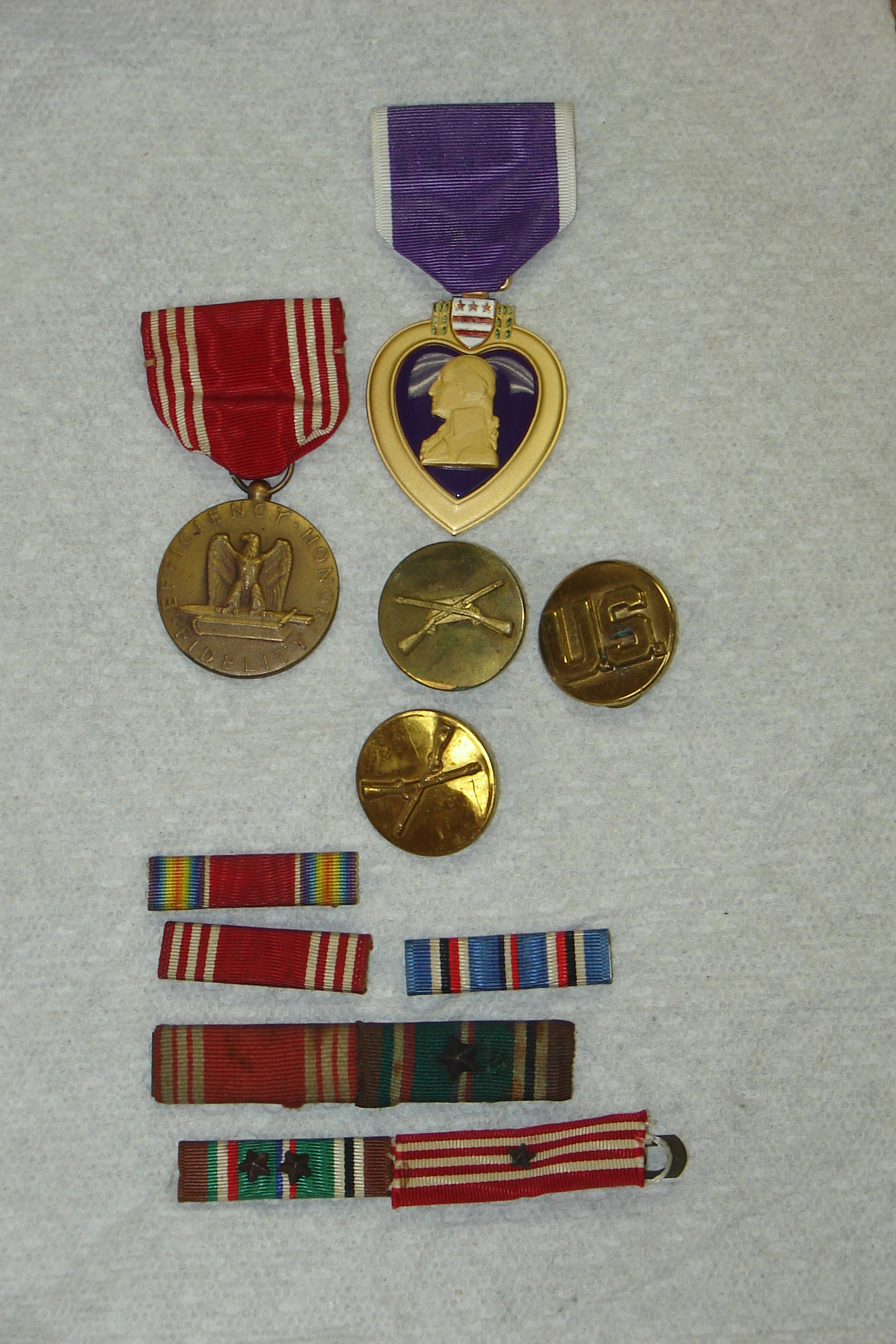
…In the invasion. Yeah, that was in, that was June,…no when the hell was that…we went in there two days after D-Day, yeah, two days after D-Day we went. And, see they were…they got us in a marshalling area, then they started divided us in groups, and, as we were in groups there, we had LCI’s and LCT’s, Landing Craft Infantry, and Landing Craft Transport. And, they would put us on those, and then we’d cross the channel, and into there. And, when we got there it was still pretty, pretty bloody there and stuff and that, we tried to get into Saint-Lô and that’s when I got wounded, trying to get into Saint-Lô. I had a couple of my men, we were going up with some hand grenades and that, to see if we could see anything there, but Saint-Lô is up there on a hill, so, two of my men and I were going up there and I says “You know, we got be careful now, we’re getting pretty close. They must have everything zeroed-in here.” So I said,”We gotta get, try to get in the range where we can shoot a couple – throw a couple of hand grenades up there (clears throat), see if we get any static.” But, it seemed like I no sooner said that to them, and we started, we said, “We’d better go back a little bit, and wait-wait a while.” As soon as we started to go back, they started shooting shells at us, and, so we just, we’re turning, and as I was turning around I caught some shrapnel in my leg, and all I felt was warm blood all over me, I didn’t know what-what had happened. But, we, we went back, we got-managed to crawl back. And then we went to the f -I went to the field hospital. They were lucky they didn’t…they were a little behind me, and they – I was kind of up ahead, and they were a little behind me, as I’m turning around it caught me inside the leg there. And, and they didn’t catch any shrapnel, I caught a couple pieces, and went back to, crawled back into the, over there, and we were staying in hedge rows then. The hedge rows were like – better than, better than a foxhole. They were like hedges all, all around the-uh, perimeter there. And, we used stay in there when they’d bomb, we were able to get in those holes there, and avoid it. Well we couldn’t get to, Saint-Lô because as we’d start going up, well, we proved our point when we, when we-when I went up there with a couple of guys, and, we came down and then we says, “Yeah they’re up there yet.” We thought maybe, that they might have moved on, But they were still there. So, they guy said “Well, what are we gonna do, Sergeant?” I said, “Well, I think we’re gonna have to wait-our plans are gonna have to (unintelligible).” And, then the Colonel came over there, because the Lieutenant wanted me to go, go there again. And I said “No, no, no,” I says ,“They’re over there.” So anyway the Colonel came and, good thing the Colonel and I got along real good. And, he liked me and he was real nice. And, he said something about, I – “Are you- disobeying the Lieutenant’s orders, and that?” You know. And I told him what happ-well anyway, I don’t want to go into that. But…anyway, – wh-he said, “What are you, what are we gonna do,” the Colonel said, “Well what are you gonna do, Sergeant, what are gonna do, how are we gonna get to Saint-Lô, how are we gonna find out what’s going on?” I says, “Sir, there’s no way you can send men up there.” I says, “Our planes are-we’re gonna have to-we need the Air Force. Alright, they’re gonna have to come and bomb the Hell out of Saint-Lô.” I says,” Otherwise we’ll never be able to make them move.” And, the Colonel looked at me and he, kind of smiled and he walked away. So, my platoon guys, even the other platoon sergeant then came up to me and.. “Hey what’s goin’ on?” I said, We’re gonna stay here. We’re gotta wait for the Air Force. I could tell from the Colonel’s expression, our Air Force is comin’ over and they’re gonna bomb the Hell out of Saint-Lô.” And, they said, “What do we do?” I said, “If any bombs come, dump-go, go inside and, stick with the hedge rows,” I says, “And that’s it.” I says, “There’s nothing we can do. We can’t make a move until then.” So sure enough a couple of days later, our planes came over. And, the lead plane dropped the bomb, didn’t – I guess he didn’t play the wind elevation, and general McNair was on our right flank. And…one of the bombs, the lead bomb dropped and hit part of our troops and General McNair. And, so, then the rest of the planes went there, anyway after the planes there then we, then we made our move, and Saint-Lô, all I could remember standing in Saint-Lô was, the cross, the steeple and the cross from the church there. And, everything else was pretty well mowed down, they bombed, they bombed the Hell out of Saint-Lô. But they had to do it. They had to do it because we couldn’t, we couldn’t move. Then we were able to make our moves and get through all the towns. When they- we did that, I mean, the Nazis were all retreating then, you know, they were all retreating and going on. So then our next move was…work our way into, through Fountainbleau and into Belgium and stuff, and that was about what happened there, you know.
OK, so after Saint-Lô and the Germans started retreating, your unit ended up in Belgium?
Yeah they started, they started retreating back into, I don’t know, Luxembourg probably into Germany and stuff, and, and…and then we went into Belgium, yeah, yeah.
So were you there when the Battle of the Bulge started?
Yeah, yeah yeah.and, you know coming through, going back again to Omaha beach there…in Normandy France there, I met Leo Perni- Leo Canicci, yeah, Leo Canicci, I met him there…he’d come through with, with his outfit, and Leo said “What’s goin’ on?” I says,” You’re at war!” (laughs) I says, I says “In case…any planes start coming over,” I said, “run in one of those hedge groves there, and bury yourself in there,” I said, “You’re pretty safe in there.” And, and he had a couple of his buddies with him, you know, and some were.”Ahh, listen to him, he’s trying to scare you, you know,” and I said, “Leo, don’t listen to these guys,” I said, “don’t hang around with them.” I said “Go find some new friends,” I said. I said, “These guys don’t know there’s a war going on.” I said, “Do what I tell’ya.” And, well anyway, so ah- so he was with us for a while, and then he moved on. And, Leo was a couple of years younger than me. “So what are you doin’, taking kids now?” I said, “what are you doing here?” He says “Me? I got my brother Sammy here too, my brother Sam!” His brother Sam was a year younger than him. Now Sammy got killed in the Bulge, Leo’s brother Sam got killed in the Bulge. He went after, I think we went there for, cleanup duty or something or other, he wound up getting killed there, but I don’t know what happened there, but, Leo knows more about that than I do. But anyway, yeah I met Leo there too, and I also met Red Pastorella…ah, you knew Red Pastorella?…yeah, Red Pastorella, came through and he wanted to stay, he wanted to stay with our outfit. He says “(unintelligible) can I stay with your outfit?” I said, “I’ll try,” I said, “I’ll see what I can do,” so I talked to the Colonel and that, you know, and I’m in pretty good with the Colonel. I said, “I’ll see what I can do.” And the Colonel said, “No, his papers are made out that he has to go to such-and-such a point, and I have to get him there, in fact, he’s leaving in a couple hours,” and that. So Red Pastorella he really has it made while he was in there, he just went there and they sent him over there right away, and -with our outfit, to come through us, and, but before that he was in the States with USO,- with the entertainment committees and stuff like that you know. So he had it, he had it pretty good, he met a lot of movie stars and everything, you know. He’s telling me all the good times he had and says. “Yeah, thanks a lot!” (laughs) But, let’s lets see…I think I met Santino from, Melrose Park. And…so there weren’t too many I met, but, you meet a lot of new friends. When you got your guys and your life depends on them and their life depends on you, you get to be pretty good buddies, you know, we were all very close. (unintelligible)…Yeah you, no I didn’t meet him (to Misasi), no I never met him, but you saw him over there. Yeah you saw (unintelligible)…yeah.
Can you tell us what conditions were like, living on the field? For months on end?
Living on the field? Eating out of boxes and cans, and drinking whatever you can get your hands…water, whatever you can get a hold of. Ah, it was pretty rough…the only thing I actually liked that I can remember, was the eggs. It seemed like the eggs were like in a, compact form, and you could take them and really bite on them and they really tasted like eggs. I guess they were made from powdered eggs and stuff, you know. But, but they were good. But I’ll tell you we had a good…after we got over Saint-Lô, we got into another town, there was a little stream running through there. And…trout, yeah there were trout there. So, one guys says, “Anybody got a pin? Anybody got a pin?” He said, “I’m gonna catch some of those fish!” you know. And, our little hillbilly friend…uh ”Hey don’t any of you guys, don’t you know how to catch fish?” (swooping sound) Boom! Throws a hand grenade in the water?” (laughs) …Whooohoohoo! Those fish were floating, we’re scooping them all up (laughs) so we had a real, we had a real shore lunch then, (laughs) yeah the concussion just knocks them and they just, they were. you know if they stand, and we then we didn’t, after a while they’d just shake themselves off and they’re back in the water, you know. But, one hand grenade that’s all it took. “I’ll show you how to catch fish,” pulls the pin out, threw it in the water, and the fish come…(laughs). So anyways we built a fire, cooked up the fish and, we had a good meal…yeah we- we ran into a couple, couple of farmers along the way, and, one of them, he had a hold of some Dubbin, remember Dubbin? That was for your shoes, to waterproof your shoes and your boots, and I, I could speak Italian, so French, I was picking up some French, you know, some of its very similar, so… he’s asking me if that’s for cooking, you know. He thought it was some kind of grease you put in a pan and you cook with, you know. He figured, well we’re out in the fields there and that, that’s probably you know. I said, “Now where did you get this anyways? I haven’t seen that since basic training.” And, he said “ I don’t know I found a package it and, I thought it was for cooking.” I said no, when I told him what it was for, he’s telling his wife and they’re both laughing, and his wife goes “See, I told you we couldn’t cook with it!” (laughs)…Ah God.
I wonder what it tasted like…
Ah God, I’ll tell you, it must have been terrible, because that stuff you put it on your shoes, then they want you shine in basic training. Then they want you to shine your shoes, “Your shoes aren’t shined!” “We’ll I had to put dubbin on them.” “Shine those shoes!” And you had to keep shining shoes until you got some shine to them. (laughs) Ahh, I’l tell ya.
Ok, so, you unit had to participate in the Battle of the Bulge?
Yes.
OK, can you tell us about that?
Well…its was rough, It was cold, very cold. Bitter cold I think just fighting the cold alone was a battle in itself, I know we took a beating there, and the Nazi’s took a beating too. It’s, It was…it didn’t last that long but..it was nothing but, nothing but fireworks. Its like standing in, its like if you go to a fiesta and you see the fireworks there? They have them every year you know…Its like you go there and you stand right in front them, you’re right in the middle of them and…Ah, there ain’t much I can say.
So after, after the battle of the Bulge, and the Germans were beaten back, where did your unit end up next?
Well, they, they started…sending us back…to the United States. And, they put us on some, what they called forty, forty and eights – forty men or eight horses. Was a French freight train. So they put they, put us on those freight trains, and we’re freezing, its cold. So we get to one railroad yard, and a couple of guys grab one of the carts there and starts breaking it up We’re building a fire, building fires right in the middle of our freight cars where we’re staying. And one of the guys said “Hey guys, Cognac! Cognac! Come on …Cognac!” These big tanks they had there, like these big, like you see these milk trucks with the wagons, you know, with big tanks on there, and it says ‘Cognac’ on there. So it was Cognac, I mean they could mark it otherwise. So, only how the hell do we get this open? They got it all locked up. Again…one of the hillbillies…Boom! (laughs) Choom! (Laughs) All the Cognac is pouring down like crazy there, we had our canteen cups and it was going through there. We were the happiest guys that were cold, and, so we’re drinking the Cognac and stuff, and the Gendarmes, the Gendarmes, the, French policemen, they’re chasing us “Hey!’ They got their clubs, “Hey!” “Get outta here before we shoot you! Get out of here!” Boy they ran the other way. They didn’t want to mess around with us. So anyway we got these fires going and stuff and…so, now they said something about, “Oh you guys are lucky.” They says, “You’re going back on the, you’re going back to the States on the Europa. That’s a German luxury liner that was a converted, you know, troop ship. So we had staterooms, we had our own showers, oh, it was beautiful, But, here’s the catch there. Crossing the Channel…we went into France, to make the invasion into France there, the…water there, was so rough, that English Channel water, I’ll tell you, I’ve never seen a rougher body of water. And, even…the English soldiers that we had manning the LCI’s and LCT’s, they were even getting sick. How are we going to win this war, everybody’s sick, you know. But..soon as you start hearing some shooting and stuff, you sober up in a hurry, you know . But anyway, but that English Channel, I got sick, I says “Dammit,” I says, “If I have to cross this water again,” I says “I’m not going home. I’m going to find myself a home around here-anybody want to visit me from the United States, they can come out here.” But, then I heard we were going back on the Europa, German luxury liner. I said “Oh, thank God.” I said, oh I told the Colonel, I says, “Thank God,” I says. “I didn’t want to cross that damn English Channel again.” I said, “I swore that I would never cross-“ He says, “Well,” he says, “Sergeant,” he says, “We gotta cross the English Channel,” he says, “It’s docked at Southampton!” (laughs) I said, “Oh no!” He said , “Oh yes.” He said, “Maybe the water won’t be so rough now,” he said. But, anyway it wasn’t that bad, I guess we knew we were going home and we, it wasn’t that bad. So then, we came back on the Europa, and it was a very nice cruise…our own staterooms, showers, good food, no Mutton Stew for breakfast (laughs).
Did you land in, New York?
Yeah, yeah, Then we came to New York.
Did you get to see the, Statue of Liberty?
Yeah, thank God, that was good…
How did you feel when you saw it?
Good to see it, good to see it, oh God. Ah, God, I’ll tell ya. It was so beautiful to get back in the United States, there’s no place like home, I’ll tell ya. Yeah you know, you got some, got some good times, you got some rough times. Like I said before we used to sit around and sing a few songs, I always liked the sing-along with guys, and stuff and that you know. So a couple of buddies in the army, I started singing a song one day and they’d joined in, first thing you know there were three or four of us that were all, started grouping and sometimes you know, they would chime and stuff, and that you know . And, yeah you look in there, that…that’s the “Sleepy Lagoon,” and we wrote a parody on that song there.
Can you give us the parody?
Yeah, see this song here…the Sleepy lagoon was a beautiful love song and, Harry James was one of the band, band leaders that… think he was married to Alice Faye, or…one or the other. And anyway, so Sleepy Lagoon, the words of the Sleepy Lagoon are (singing) “A Sleepy Lagoon…a tropical moon…and two on an island. A Sleepy Lagoon…and two hearts in tune…in some lullaby land. The fireflies gleam…reflects in the stream…they sparkle and shimmer. A star from on high…falls out of the sky…and slowly grows dimmer,” Well anyway that’s their words. And our words were (singing), “A sloppy latrine…a pastoral scene…and two of the basin. The job isn’t fun…the mirror is one…you can’t see your face in. The lighting is bad…it’s driving me mad…that’s half of it brother. The further you go…the first thing you know…your shaving each other. A sloppy latrine…where fellas convene…with natural intentions. The first thing you know…its beginning to sound…like the seven conventions. One fella heard this…one fella heard that…and that’s how they start. For rumors careen…in sloppy latrine. Sweetheart…” (laughs)
Very good!
Yes, so (laughs)…yes, that’s what we had…now we made up another one…where, you know (signing)…”Give my regards to Broadway…remember to meet at Herald Square…” well we had, Harry Truman was, president, Frank…FDR had died so, Harry Truman was our president, and (singing)…”Give our regards to Harry….tell him that we’re stranded here. Tell all the brass that’s sitting on their-…that Christmas draws right near. Them him that we’re all yearning…to see the good ole’ Z of I,” – zone of interior- “This is the test for all those best who say their fighting for the poor GI.” (laughs) Yeah…
Now earlier you were telling us about -the Red Cross and the Salvation Army, and, their doughnuts. You had a little diddy about that too?
Oh yeah, yeah. The Red Cross. Yeah, they used to give us those doughnuts. First they used to charge us for them, then the Salvation Army started giving them free, so, they started giving us free doughnuts. But, here’s the song we wrote for them (singing)…”Those Red Cross doughnuts, those Red Cross doughnuts…oh my, how heavy they ride. And that Red Cross coffee… that Red Cross coffee…it…tastes…a lot like cyanide. And those Red Cross ladies who build your morale…they don’t give lovin’….they just want to be your pal. They ain’t deservin’…if they keep servin’…those coffee and doughnuts to me.” (laughs) Ah, God…(laughs)
So you were a multi-talented soldier.
(Laughs) To keep your sanity you had to do something. (laughs)
So when you arrived in, New York, was there much of a “welcome home” celebration for you?
Yes the people were all…I guess there were a lot of families that knew that, they were coming in, and so…They naturally, cheered everybody, everybody home, not only their soldiers, their guys that went in, but all of us too. So, we didn’t have anybody from Melrose Park there greeting us, but…that’s not to be expected, you know. And, I know you can have a big party for us. (laughs). No but, actually, you know I’m glad that…we hoped and prayed and, that that was the, the war that was going to end the wars. But now we’re still breaking out with different things. To get peace, that’s the main thing now. And, I don’t know it just seems like some of these countries, their own people are fighting their own people and, its sad.…but, you know we, we didn’t expect any big fanfare, we didn’t expect, we did, we did what we were told to do, we did our job, and we knew it was for the good of, our families and everybody else’s family, and that’s the reason we wanted to get into it to being with. Like I say when we were first drafted, we didn’t want to be a 4F. And, I hate to see any of these kids going into war now. And, you know at that time, I’d say it was a necessity, we had to get into this. They bombed Pearl Harbor, and who knows where they would have gone from there. So, we had to actually get into this, into World War II. But nowadays, it seems like we’re dispersing our troops all over the world, and, you know we’re trying to, we’re trying to be the good guy for all, all the nations but, its kind of hard for the United States to, to bear the big burden they have to get all these other countries to cooperate. And let’s get, League of Nations, and let’s get things organized where, we can get peace…everything peaceful. I don’t know, when I got out of the Army, Red Pastorella got me in with Merit Liquor, and, it seemed that, you know you’re trying to, you’re trying to do things, to get things straightened out, and you figure “Well, everything is goin’ along fine,” but then sometimes things just, aren’t fine. But actually, I think what we should do… well…getting, the reason I mentioned Merit Liquor was because, they had an association, a liquor association. If you had a tavern, and you didn’t pay your bill, you can’t say, “Well I’m not gonna pay that guy, I’m gonna get it from Gold Rose Liquors. Oh I’m not gonna pay him, I’m gonna get it from Merit Liquors.” They had a pact where they had, if you didn’t pay your bills, you couldn’t get liquor from any of them, see? And this is the kind of pact we should try to get, to different countries. If one country goes against something, all the countries jump in and say, “Listen, there’s 30 countries against you, now what, what are you trying to do? You can’t do that or were going to put an end to it.” And, but I don’t know know it just seems where we try different things, we’re going to stumble into something pretty soon where there’s going to be peace on earth, that’s what we want – peace on earth. I don’t like wars. I’m sure Johnny doesn’t like war. Nobody likes wars. Here we are thankful to God that we made it through. I’m 89 years old now, and…I never thought I would reach that age without the war, But, I guess the Lord still wants me around (laughs) ah, we gotta try to laugh, laughter is good for you and…
OK thank you very much for sharing your memories with us today…thank you.
Well its been an honor being able to talk you and all of you lets hope and pray that peace on earth is going to be peace on earth for everyone. And, best of luck to all of you and may the peace of the Lord and everlasting love be with each and everyone of you, thank you.